
Choosing tape in hair extensions for a salon program is not only about length, grams, or a polished product photo. In real service work, the better product is the one that lies flat under mirror light, brushes smoothly after washing, supports natural color blending, and feels calm during daily styling. This guide focuses on modern salon sourcing: service scenes, flat tab comfort, shade planning, sample testing, care habits, removal logic, stock planning, and custom inquiry.
01 / Product Value
Why Tape In Still Fits Modern Salon Services
First, Tape In hair remains useful because it solves several practical salon needs with one clean structure. It can add fullness through the sides, extend the lower length, soften a color result, or create a more polished blowout shape. Meanwhile, the flat panel design helps the attachment area sit close to the head when sectioning is correct.
In daily service work, this flatness matters more than many technical numbers. A finished style can look expensive only when the attachment stays hidden during normal movement. For example, the hair should still look smooth when it is tucked behind the ear, lifted away from the face, or brushed into soft waves.
However, a modern Tape In program should not be built around speed alone. Fast application is helpful, but it is only one part of the service. The hair must remain soft after washing. The tab should feel flexible near the scalp. The shade must blend under salon lighting. In addition, the removal process should feel controlled for trained professionals.
Therefore, product selection should begin with the full wearing cycle. A good sample needs to pass touch, brush, wash, dry, style, placement, and removal checks. When these details work together, the service feels calmer, the styling result looks more natural, and future stock planning becomes easier.
In other words, Tape In is not just a simple extension format. It is a practical salon tool for creating controlled volume, soft length, and color dimension without changing the entire method menu. That is why sourcing should focus on real salon use instead of relying only on catalog presentation.
02 / Scene-Based Judgment
Choose by Real Appointment Scenes, Not by Product Names Alone
For a fast volume service, the main goal is usually a fuller outline. Fine or medium hair may not need dramatic length, but it often needs more density through the mid-lengths. In this situation, Tape In pieces can help the final shape look fuller while keeping the top area clean.
For soft length work, the goal changes. The extension ends must connect with the natural haircut, so the service needs careful layering and enough pieces through the back and sides. Otherwise, the lower length may look separate from the natural hair. As a result, length planning should always include blending and finishing.
For color enhancement, Tape In products can add brightness or depth without another chemical process on natural hair. A few lighter panels can frame the face. A rooted blonde can soften a grow-out area. Similarly, dimensional brunette pieces can make flat brown hair look richer under waves.
For event styling, the method can support soft curls, half-up looks, and fuller photo-ready shapes. However, installation should not be rushed on the event day. A trial service gives time to check comfort, shade blending, movement, and final styling direction.
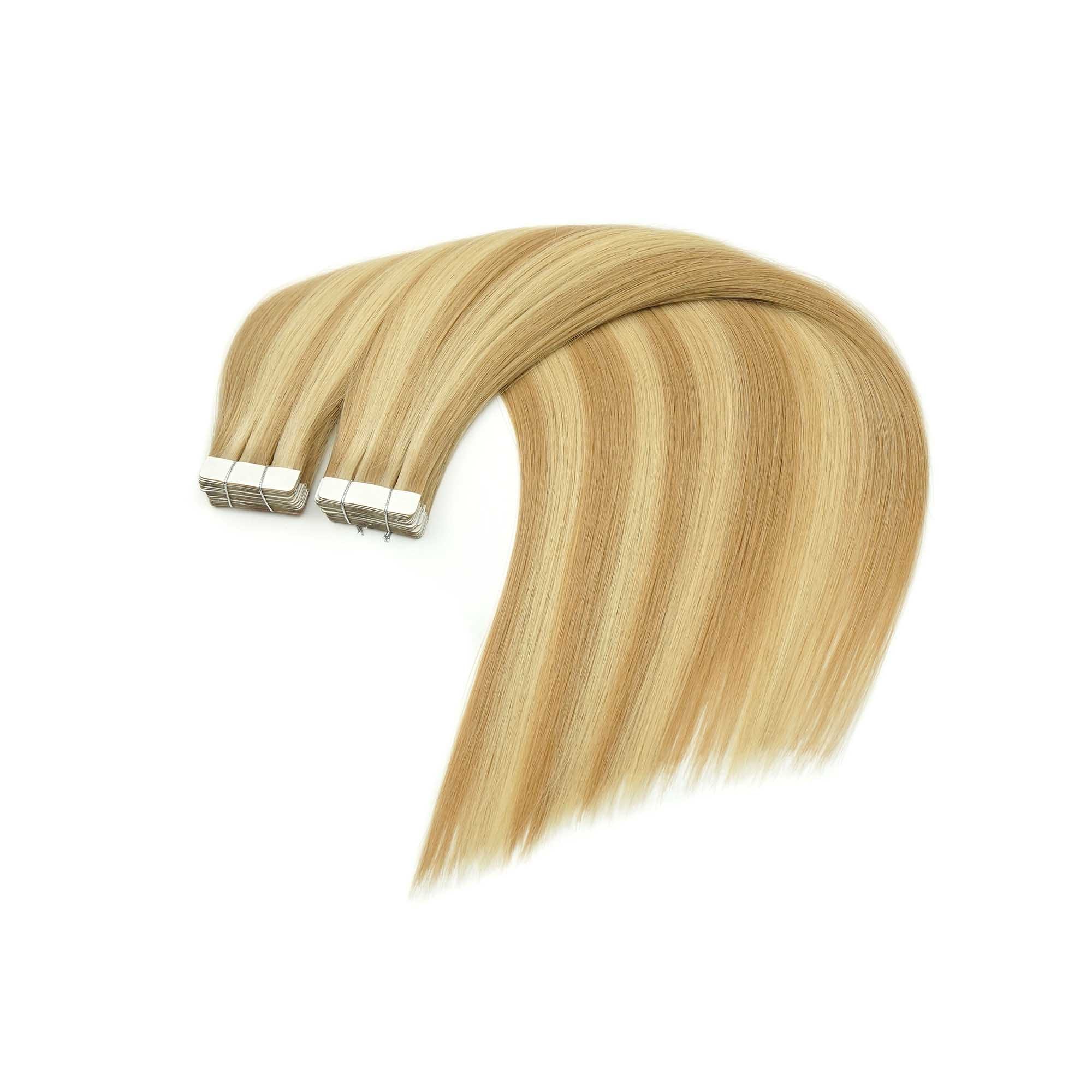
Meanwhile, each scene needs a different product judgment. A volume service needs flat tabs and natural density. A color service needs shade dimension and root control. A length service needs end fullness and haircut blending. Because of this, one product pack should never be judged by only one angle.
A practical sourcing plan groups Tape In products by service result. For example, one shade group may support everyday fullness, another may support blonde dimension, and another may support brunette depth. This structure makes product selection easier during consultation and keeps inventory more organized.
03 / Product Features
What a Strong Tape In Product Should Feel Like
First, the hair should feel soft without feeling overly coated. A heavy coating can create a beautiful first touch, but it may not last after washing. Therefore, a sample should be handled after shampoo, full drying, and gentle brushing before any larger order decision.
Next, the tab should feel thin and flexible. A stiff tab can create a raised edge near the scalp, especially around the sides and upper layers. At the same time, the tab should not feel weak or messy. The ideal tab feels clean, bendable, and easy to align during application.
Then, the end density deserves close attention. Hair that looks full near the tab but becomes thin at the ends can make the final style look weak. In contrast, balanced density gives the haircut a smoother finish and helps waves look more complete.
Additionally, color should look natural in motion. A shade can appear correct when held flat on a table, but it may look different once the hair moves around the face. For that reason, shade testing should include mirror lighting, daylight, and a few movement checks.
For professional sourcing, human hair tape in extensions should be reviewed as a complete service material. The hair, adhesive area, shade, length, end density, and care routine all shape the final wearing experience.
Useful touch points during sample review
Check whether the hair moves softly after brushing.
Bend the tab gently and feel the edge thickness.
Hold the ends against a darker background to review fullness.
Wash one sample before judging long-term softness.
Compare the shade under different salon lighting conditions.
Moreover, the sample should be checked after normal handling, not only after careful unpacking. A product that survives brushing, washing, blow-drying, and soft curling with calm movement will usually feel more useful in a real service menu.
04 / Shade Planning
Color Planning Should Create Natural Movement, Not Flat Blocks
In real hair, color rarely appears as one flat tone. Brunette hair may include soft warmth, darker depth, and lighter surface reflection. Blonde hair may include beige, ash, gold, and lowlight pieces. Therefore, Tape In shade planning should think in layers instead of one exact swatch.
Rooted colors are especially helpful because they reduce contrast near the attachment area. A darker root can make the tab zone look softer, while the lighter length still creates brightness. This makes rooted shades useful for lived-in blondes, balayage effects, and grow-out friendly services.
Highlighted pieces work differently. They can create visible dimension through the mid-lengths and ends. However, strong contrast should be used carefully near the face. If the highlight appears too striped, the finished style may look less natural even when the hair quality is good.
For brunette services, depth is often more important than brightness. A warm brown can soften the face, while a neutral brown can create a calmer finish. Additionally, mixing nearby shades can help curls and waves look more natural because the color moves with the shape.
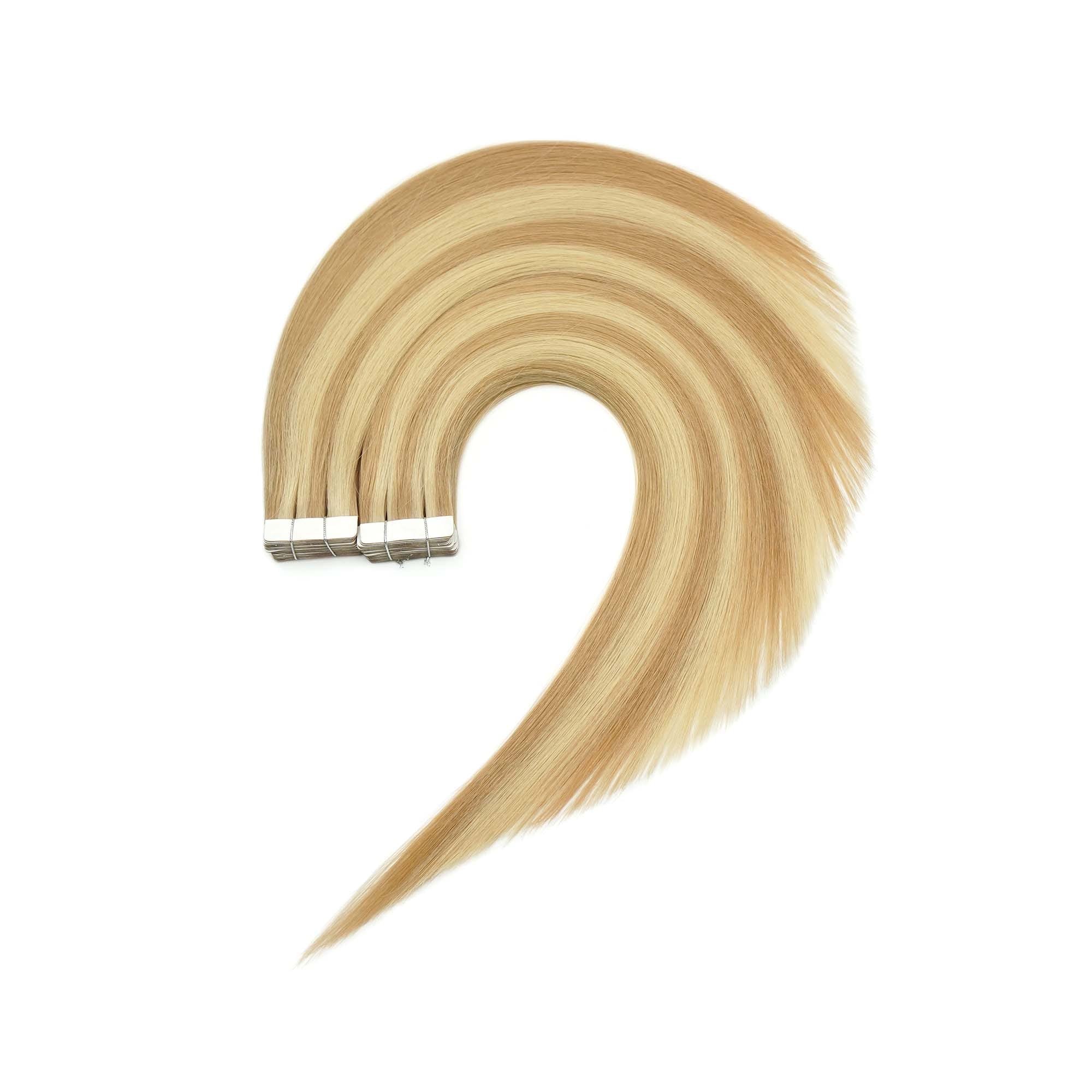
Moreover, shade records should be simple and repeatable. A useful note can include natural hair level, extension shade, root tone, lighting condition, length, and final photo result. Over time, these records become a practical color map for future stock planning.
This approach also prevents overstocking. Instead of collecting too many shades, a salon program can begin with core dark shades, medium browns, rooted blondes, and a few dimensional blends. After several service records, the strongest shades can receive deeper stock.
05 / Purchase Checklist
A Decision Checklist That Connects Product Details with Real Use
A checklist helps remove guesswork. Beautiful photos may create interest, but repeat service quality depends on small practical checks. Therefore, every sample should move through the same review process before it becomes part of a regular product range.
The following checklist focuses on salon reality. It connects hair feel, tab behavior, color, washing, styling, and removal with the final result. This keeps sourcing decisions closer to daily work rather than only product description.
| Review point | What to check | Why it matters | Practical test |
|---|---|---|---|
| Hair movement | Soft fall, natural swing, no stiff coating | Supports believable styling | Brush, lift, shake, and let the hair settle |
| Tab comfort | Thin edge, clean surface, flexible bend | Helps placement sit flatter | Bend the tab and check edge stiffness |
| End density | Enough fullness through the lower length | Creates a more polished finish | Compare ends against a darker background |
| Shade blend | Natural tone under different lights | Reduces mismatch in mirror and photos | Check daylight, mirror light, and warm indoor light |
| Wash result | Texture after shampoo and full drying | Shows real softness after service | Wash once before approving stock |
| Removal behavior | Residue level and tab separation | Affects maintenance time | Remove with professional remover on training hair |
In addition, the checklist should include written notes. A simple sample form can record softness, shedding, color match, tab feel, wash result, styling response, and removal behavior. Over time, these notes become a practical sourcing system.
When a product enters repeat stock, the decision should feel steady. The team should know which service scenes it supports, which shade families sell through faster, and which care instructions must be explained after installation. This is much more useful than a product range built only around visual variety.
06 / Installation Logic
Flat Placement Depends on Sectioning, Tension, and Balance
First, section thickness controls the adhesive contact. If the natural hair between two tabs is too thick, the adhesive may not connect well. However, if the section is too thin, the extension piece may feel heavy. Therefore, balanced sectioning is one of the most important skills in Tape In work.
Next, the placement map should respect the head shape. Tabs should not sit too close to the visible hairline, crown edge, or parting area. Otherwise, normal movement can expose the attachment. A clean map leaves enough coverage hair above and around each panel.
Then, tension should stay gentle. The extension should feel secure without pulling. When the head turns, the attachment area should not feel tight. This is especially important near the temples, nape, and side panels because these areas move often during daily styling.
After application, the side profile should be reviewed. This step catches many issues early. If the tabs create a raised shelf, sectioning may need adjustment. If the shade line looks too strong, a softer color mix may create a better final result.
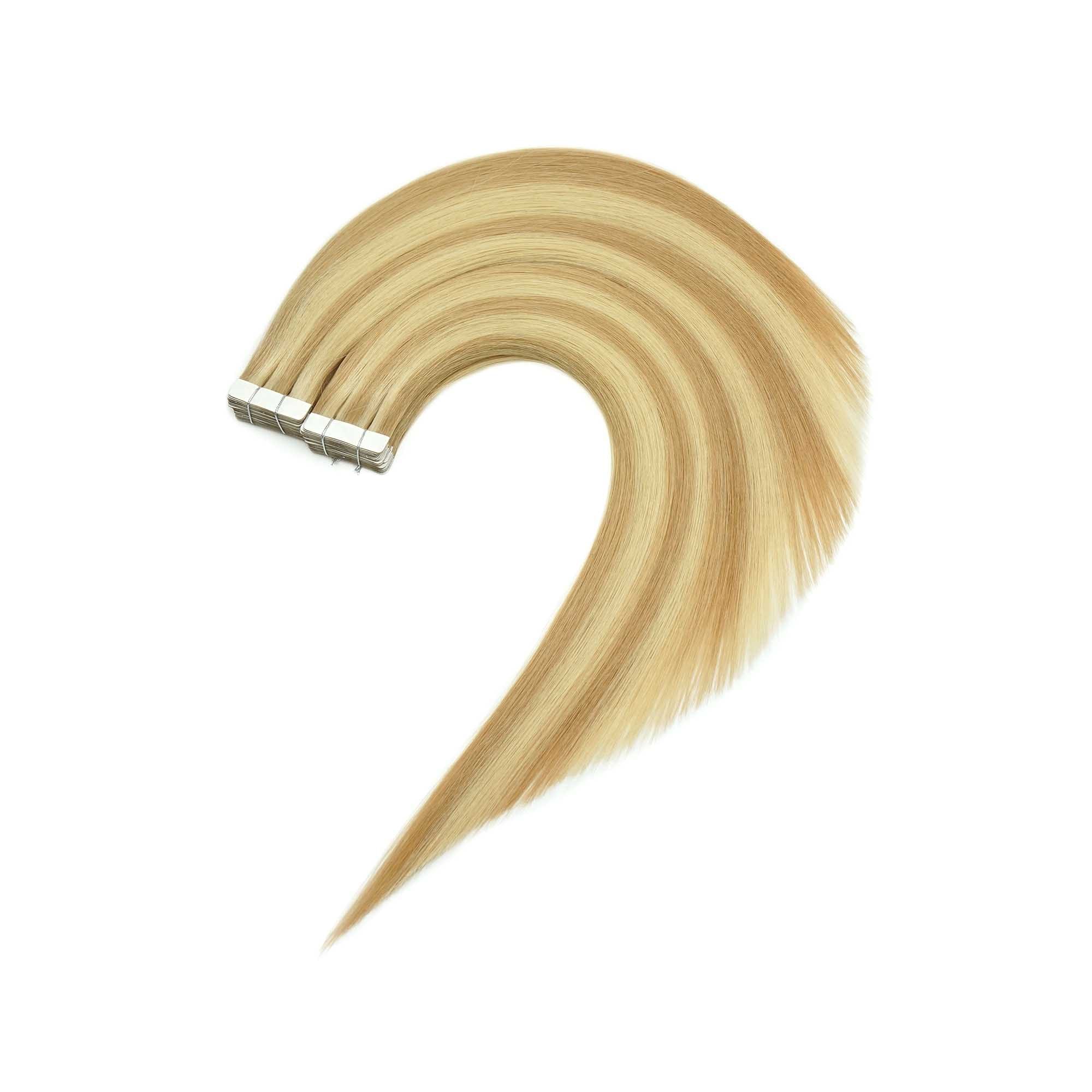
Furthermore, installation should not end before movement testing. The hair should be brushed, shifted forward, tucked behind the ear, and checked from the side. These simple movements show whether the product can stay hidden during real life, not only in a still photo.
This is also where training and product quality meet. Even good hair can look poor with rushed placement. Likewise, skilled sectioning cannot fully hide a tab that feels too thick or a shade that contrasts too strongly. Both product selection and service technique must support each other.
07 / Sample Testing
A Sample Test Should Feel Like a Small Real Appointment
First, photograph the sample before heavy handling. This creates a clear record of color, shine, and end shape. Then, brush the hair from the ends upward while holding the tab area. This step shows whether the hair settles smoothly or begins to tangle quickly.
Second, wash the sample with a gentle routine similar to salon aftercare. After full drying, check the feel again. Some hair looks beautiful before water because of surface treatment. However, washing reveals more about real texture and long-term styling comfort.
Third, style one section straight and another section with a soft wave. The goal is not extreme heat. Instead, the test should show whether the hair responds naturally to normal finishing. A good sample should remain smooth without looking dry at the ends.
Finally, apply and remove a small section on training hair. This reveals tab alignment, flatness, adhesive behavior, and residue level. Since Tape In services depend on maintenance, removal testing is just as important as installation testing.
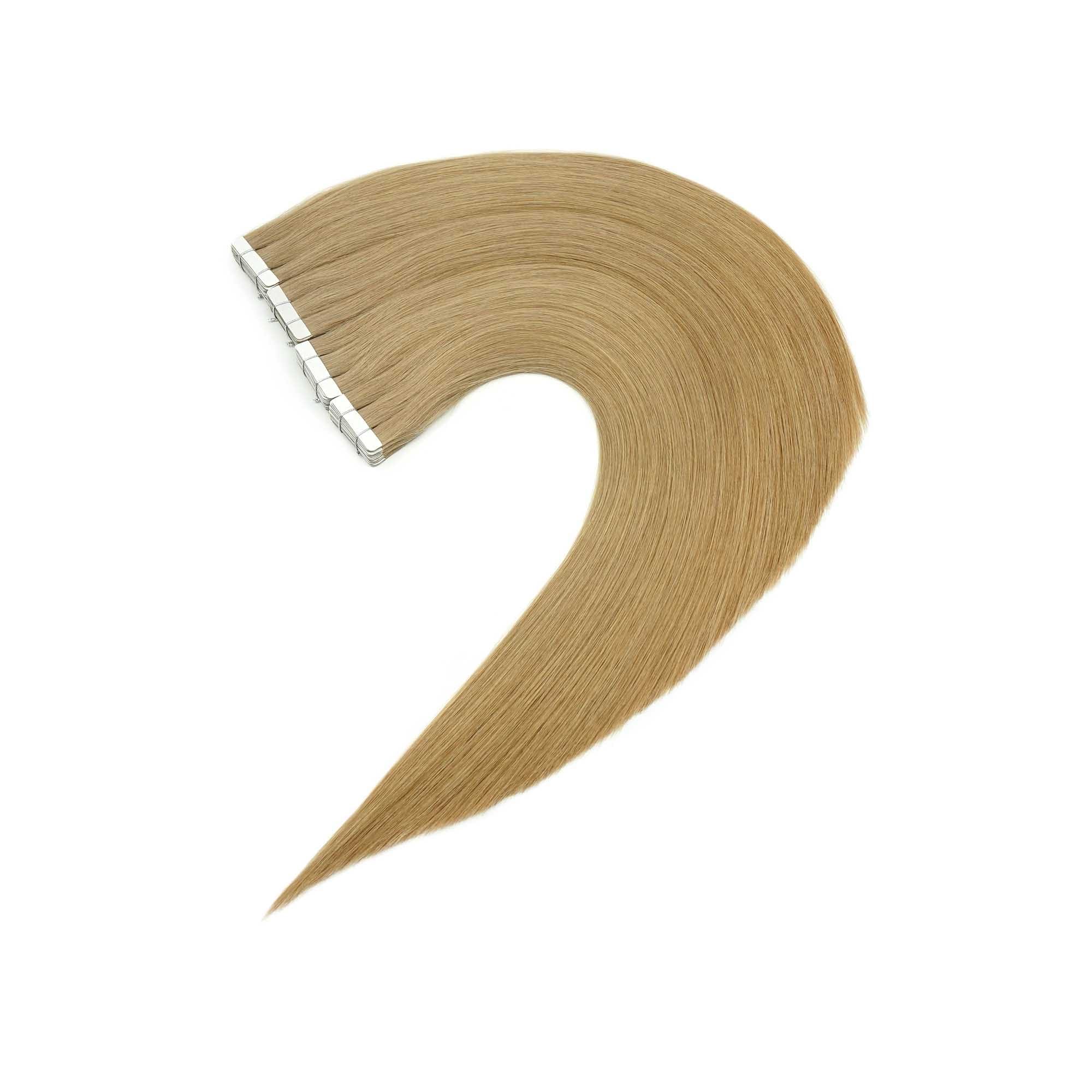
Moreover, sample notes should use clear words. Record whether the hair feels soft, dry, coated, flexible, full, thin, easy to brush, or hard to blend. Plain notes make future comparison easier and help avoid ordering decisions based only on memory.
After several tests, patterns appear. A shade may look excellent in photos but too warm under salon lights. A length may sell visually but need more care explanation. A tab may feel comfortable but require specific removal handling. These details help build a smarter product plan.
08 / Care Guidance
Simple Care Rules Protect the Final Look
Aftercare should be easy to remember. First, brushing should begin at the ends while the attachment area is supported. This prevents unnecessary pulling and stops small tangles from moving upward. Daily brushing also keeps the hair smoother between appointments.
Next, washing should protect both the hair and the tabs. Conditioner, masks, and oil-heavy products should stay away from the adhesive area. However, the mid-lengths and ends still need moisture support because extension hair does not receive natural scalp oil.
Drying is equally important. Tabs should not stay wet for long periods, especially before sleep. Damp attachment areas can feel uncomfortable and may affect the wearing experience. Therefore, gentle drying near the roots should become part of the routine.
For a broader aftercare explanation, Surblond Beauty also provides CARING FOR YOUR HAIR EXTENSION. This page can support care education around washing, brushing, sleeping, swimming, and daily maintenance habits.
A clear Tape In care routine
Wait before the first wash after fresh application.
Keep oil, conditioner, and masks away from adhesive tabs.
Brush from the ends upward while supporting the top area.
Dry the root and tab area before sleeping.
Use heat protection and avoid direct heat on the tabs.
In addition, move-up timing should be realistic. As natural hair grows, the tabs move farther from the scalp. If maintenance is delayed too long, brushing becomes harder and the attachment area can feel less tidy. A predictable schedule protects both the result and the removal process.
This care language should be short enough to remember. A simple printed card, a quick brushing demo, and a clear maintenance reminder often work better than a long list of warnings. The goal is a calm routine that supports the hair without making daily life feel complicated.
09 / Common Mistakes
Avoid These Mistakes Before Expanding Stock
One common mistake is choosing by shine alone. High shine looks attractive in product photos, but it does not always prove lasting softness. Instead, the sample should be washed, dried, brushed, and styled before approval. This process creates a more honest view.
Another mistake is ignoring tab comfort. The tab is small, but it controls flatness, comfort, removal, and re-taping potential. If the edge feels stiff, the attachment area may look raised. If the adhesive behaves poorly, maintenance becomes less efficient.
A third mistake is stocking too many shades too soon. A large shade range may look impressive, but it can slow organization and reordering. Instead, a focused first range often works better. Core dark shades, useful browns, rooted blondes, and dimensional highlight blends can cover many service scenes.
Additionally, some programs focus only on long lengths. Long hair creates strong photos, but shorter lengths can support everyday volume services. Therefore, the assortment should include practical fullness options as well as transformation lengths.
Finally, aftercare should not be treated as a small detail. A good extension service needs clear care language after installation. Without simple brushing, washing, sleeping, and maintenance guidance, even good hair can become harder to manage.
The better approach is steady and hands-on. Test a narrow group first, record real service notes, then reorder the shades and lengths that prove useful. This keeps the program easier to explain and easier to maintain.
10 / Stock Planning
Build a Tape In Assortment Around Services, Not Random Shade Curiosity
A practical assortment starts with repeatable results. Natural black, dark brown, medium brown, light brown, rooted blonde, beige blonde, and highlighted shades can support many salon menus. However, the final range should follow service demand, not only personal color preference.
Length planning should also remain balanced. Mid-length options can support fullness and natural shape correction. Longer options can create stronger transformations, but they require better blending, more care explanation, and more precise sectioning.
Packaging and labeling matter in daily operations. Clear shade names, length marks, weight notes, and product type details reduce picking mistakes. In addition, organized storage protects tabs from dust, heat, and unnecessary pressure.
For the first order, a narrow but useful range is often stronger than an oversized mix. A focused selection is easier to test, photograph, explain, and reorder. After real service records appear, stock can deepen in the shades and lengths that perform consistently.
Moreover, each shade group should have a clear purpose. Some shades support root blending. Some support brunette depth. Some support blonde brightness. Others support face-frame highlights or low-contrast volume. This makes the product map easier for the whole team to understand.
At the same time, stock should leave room for sample learning. If a color family starts appearing in more consultations, a small sample test can confirm whether it deserves a regular place. This keeps buying controlled while still allowing the product menu to grow naturally.
Extended Reading
Useful Pages for Product Review and Care Education
Tape In Category Page
For product direction, shade planning, and sample discussion, the category page gives a direct product entry.
Open Tape In category →Tape In Product Detail
For product-specific sourcing, the product detail page supports a more focused review.
Open product detail →Hair Extension Care
For daily care language, the care page can support salon education after installation.
Read care guidance →11 / FAQ
FAQ: Tape In Salon Sourcing Questions
What makes Tape In suitable for soft volume services?
Tape In products can create fullness because the flat panels spread hair across a wider area. Therefore, the result can look natural when the tabs sit close to the scalp and the sectioning is balanced. For fine or medium hair, lighter placement often works better than adding too many pieces. The best result combines flat tabs, natural shade blending, and a haircut that connects the extension ends with the natural length.
How should samples be tested before repeat stock?
A useful test should copy real service conditions. First, review the hair straight from the pack. Next, brush, wash, dry, and style it with normal salon handling. Then, apply and remove a small section on training hair. This process shows softness, shade behavior, tab comfort, end density, and residue level. It gives a clearer result than judging the product only by shine or first touch.
Which shades should a starting Tape In range include?
A focused starting range usually includes natural black, dark brown, medium brown, light brown, rooted blonde, beige blonde, and a few dimensional highlight shades. However, the final range should follow real service demand. Rooted shades often support softer attachment blending, while highlighted pieces can create face-frame brightness. After several test services, the strongest shades can receive deeper stock.
Can Tape In hair be reused after removal?
Reuse depends on hair condition, care habits, removal technique, and correct re-taping. If the hair remains smooth and the tab area can be cleaned properly, reuse may be possible in professional settings. Still, every set should be inspected before reapplication. Rough ends, heavy tangling, or adhesive residue can reduce the quality of the next service.
12 / Natural Conversion
Ready to Build a More Practical Tape In Sample Plan?
A stronger Tape In program begins with a focused sample plan. First, define the service goal: soft volume, natural length, face-frame brightness, rooted blonde blending, brunette depth, or event styling. Then, prepare the shade direction, length range, texture needs, gram plan, and expected maintenance routine.
In addition, Surblond Beauty can support professional discussions around custom color, length, weight, texture, and sample testing. Clear sample notes make it easier to match products with real salon scenes instead of selecting from broad catalog interest alone.
Start with a narrow shade range and test it under salon lighting.
Review softness after washing, drying, brushing, and styling.
Check tab comfort, removal behavior, and care instructions before expanding stock.
For salon programs comparing tape in hair extensions, Surblond Beauty can help turn product interest into a clear sample plan built around color, length, gram weight, care routine, and real service use.
View Tape In Product → Browse Product Range →